Digital marketing is the promotion of products, services, or brands using digital channels like the internet, mobile devices, and other digital media. It involves various strategies and tactics to connect with potential and existing customers online, including websites, social media, email, search engines, and more.
Digital marketing is the use of websites, apps, mobile devices, social media, search engines, and other digital means to promote and sell products and servicesDigital marketing involves many of the same principles as traditional marketing and is often considered an additional way for companies to approach consumers and understand their behavior. Companies often combine traditional and digital marketing techniques in their strategies. But digital marketing also comes with its own set of challenges. Digital marketing started to become popular with the widespread adoption of the internet in the 1990
How Digital Marketing Works.
Digital marketing uses online channels to promote products or services, reaching potential customers through various digital platforms and technologies. It involves building a brand, engaging customers, and driving conversions by leveraging online strategies and tactics.Marketing Commercial Advertising Plan Concept
Here’s how digital marketing works:
1. Understanding the Audience:
Digital marketing starts with identifying the target audience and their online behavior.
Understanding their needs, preferences, and where they spend their time online is crucial.
This involves research and analysis of audience demographics, interests, and online activities.
2. Setting Goals:
Defining clear, measurable marketing objectives is essential.
Examples include increasing website traffic, generating leads, boosting sales, or enhancing brand awareness.
Setting specific goals helps in developing targeted strategies and tracking performance.
3. Choosing Digital Channels:
Selecting appropriate digital channels for reaching the target audience is a key step.
Common channels include websites, social media, search engines, email, and mobile apps.
Each channel has its own strengths and weaknesses, so careful consideration is needed.
4. Creating Engaging Content:
Developing valuable and engaging content is crucial for attracting and retaining audience attention.
Content can be in various forms, such as blog posts, videos, infographics, and social media updates.
The content should be relevant, informative, and tailored to the target audience’s interests.
5. Implementing Marketing Strategies:
Utilizing various digital marketing techniques to promote products or services.
Common techniques include:
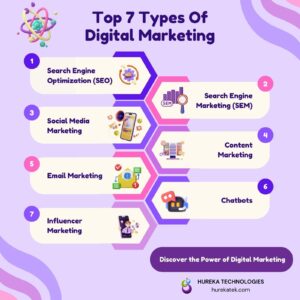
SEO (Search Engine Optimization):Optimizing website content and structure to rank higher in search engine results.
SEM (Search Engine Marketing):Using paid advertising on search engines to reach a wider audience.
Social Media Marketing:Engaging with customers and promoting content on social media platforms.
Email Marketing:Building relationships and promoting products/services through targeted email campaigns.
Content Marketing:Creating and distributing valuable content to attract and engage the target audience.
Affiliate Marketing:Partnering with other businesses to promote products and earn commissions.
Paid Advertising:Utilizing various online advertising platforms to reach specific audiences.
6. Analyzing and Optimizing:
Monitoring the performance of marketing campaigns is essential.
Digital marketing tools like Google Analytics help track website traffic, engagement, and conversions.
Analyzing the data helps identify what’s working and what needs improvement.
Optimization involves making adjustments to strategies and campaigns based on the analysis.
7. Building Relationships:
Digital marketing focuses on building lasting relationships with customers.
It’s about engaging with customers, providing excellent customer service, and fostering loyalty.
Building strong relationships leads to repeat business and positive word-of-mouth referrals.
Types Of Digital Marketing .
Affiliate Marketing
With the increased prominence of online marketing, affiliate marketing — also known as influencer marketing — has become popular among many organizations in bridging the gap between consumers and organizations. But what is affiliate marketing?
Affiliate marketing utilizes the ever-growing popularity of industry experts and social media influencers. In working with these third-party influencers, your organization will collaborate to promote your products or services for compensation. In collaboration, influencers will engage their audience with posts, blogs or videos to bring in more business for your organization and create new leads.
Within the last few years, affiliate or influencer marketing has grown immensely with new media like TikTok, Instagram, YouTube and blogs being a mainstream form of entertainment and news. Affiliate marketing has become one of the more popular forms of digital marketing. According to Influencer Marketing Hub, the affiliate marketing industry was estimated to be a $13 billion industry in 2023.
The job market is growing for marketers. The U.S. Bureau of Labor and Statistics (BLS) predicts a 6% increase through 2032 in the number of advertising, promotions and marketing managers.* In 2022, the median salary for those positions was $156,580, according to BLS.*
Content Marketing
Content marketing uses storytelling and information sharing to increase brand awareness. Ultimately, the goal is to have readers take action toward becoming a customer, such as requesting more information, signing up for an email list or making a purchase. “Content” can refer to blog posts, resources like white papers and e-books, digital videos, podcasts and much more.
In general, it should first and foremost provide value to the consumer — not just advertise the brand or try to make a sale. Content marketing is about building a sustainable, trusting relationship with your customers that can potentially lead to many sales over time, not just a single transaction.
Content marketing works in symbiosis with other types of digital marketing: It is a way to incorporate search engine optimization (SEO) into fresh website content, and the content created can be shared as social media posts and in email marketing publications. Looking at the analytics for your content marketing can tell you a lot about your customers:
What are they looking for when they land on your site?
What kinds of content make them stay on the site longer and keep looking around?
What kinds make them lose interest and navigate away?
Unlike a method such as PPC, content marketing is a long-term strategy. Over time, marketers build up a library of content (text, video, podcasts, etc.) that will continue to bring users to the site via search engines, according to Adobe Experience Cloud, an organization that specializes in digital experience tools. This content library also helps promote knowledge of your brand and increases your profile as a resource for information.
And, if users are visiting your site for information, ideally they will remember you as an authority when it’s time to make a purchase.
Content marketing is a great avenue for people who enjoy writing and/or video and audio production. But as with digital marketing in general, it also calls for strong strategic and analytic skills.
There are tons of website-building platforms and blogging sites you can use to get into content marketing. For free and low-cost options, you can consider:
Some of these tools include features that provide tips on how to incorporate SEO, social media, email marketing, website design and more, so you can get the full digital marketing experience.
Email Marketing
Even with the emergence of social media, mobile applications and other channels, email is still one of the most effective marketing techniques, Rogers said. It can be part of a content marketing strategy, providing value to consumers and, over time, converting an audience into customers.
Email marketing pros not only know how to create compelling campaigns, but they also understand optimal audience outreach and are skilled at analyzing customer interactions and data, and making strategic decisions based on that data, according to the American Marketing Association (AMA).
Email marketing software can offer many different analytical measures, but two that marketers are always striving to improve are the open rate — the percentage of recipients who opened the email — and the click-through rate — the number of recipients who opened the email and clicked on a link in the email.
According to leading email marketing software company Constant Contact, there are many things marketers can do to make their emails more appealing to users and more likely to be opened.
These include:
Create a Sense of Urgency – Writing email copy that lets your recipients know that time is running out to get a special deal or that there are only a limited number of offers available can increase the number of people clicking through to your website.
Personalize Your Email – Setting your emails and subject lines up to incorporate the recipient’s name is a proven way to increase open and click-through rates. (A sample subject line: “Katie, a special offer just for you.”)
Let Recipients Set Their Preferences – Allowing users to specify how often they want to hear from you can help keep some of your email subscribers subscribed to your list and clicking on your emails.
Marketing Analytics
One of the major advantages of digital marketing is that it is highly trackable and measurable. Once, the only trackable marketing pieces were coupons and similar direct mail offers. If a customer used the coupon, you knew the message resonated.
Today, analytics allow marketers to track user behavior at a highly detailed level:
How many times they click on a link
How much time they spend on a web page
How often they open emails and much more
But the vast amount of information available about digital marketing performance can feel like drinking from a fire hose, and marketers must be able to truly understand what the data mean and how they should inform strategy.
Not only does this allow marketers to learn what is successful with consumers and adapt their marketing messages moving forward, it also means they can demonstrate their value to the company. Understanding all of this data and using it to make strategic decisions is an important part of a digital marketer’s work — and one that sets them apart from their traditional counterparts.
There are many tools available for measuring the success of digital marketing campaigns, and many marketers will use some combination of these tools, depending on their needs and their audience. One of the most used tools for marketing analytics is Google Analytics, which can be customized in nearly endless ways to measure:
How your site is performing
Which keywords are bringing users to your site
How users are navigating through your website and much more
Having good, accurate analytics and the know-how to interpret them can help marketers “fail fast,” quickly cutting campaigns that aren’t working and building better campaigns around concepts that have a proven track record of success. Over time, you won’t just be using analytics to measure your campaigns — the analytics will also inform and improve your campaigns.
In a digital marketing degree program, you’ll study a wide range of issues pertinent to a marketing career path, including marketing plans and strategies, branding, mobile marketing and digital advertising.
Mobile Marketing
This digital marketing type is focused on reaching your target audience on their smartphone or tablet. Mobile marketing reaches people through text messages, social media, websites, email and mobile applications. Marketers can tailor offers or special content to a geographic location or time, such as when a customer walks into a store or enters an event.
In February 2021, Statista conducted a survey in which 46% of the respondents claimed they spend between five to six hours a day on their phones for personal use. In addition, 22% stated they spend 3 to 4 hours a day on their phone, according to Statista, and from the end of 2020 to the beginning of 2021, mobile users in the U.S. around 40 minutes a day on social media apps, with Facebook and Instagram holding the largest audience.
By 2024, the average time spent on the phone daily in the U.S. is expected to reach 4 hours and 39 minutes, reports Statista.
E-commerce has grown immensely in the last few years, becoming an important part of the global retail world. In 2024, retail e-commerce sales were estimated to surpass $6.3 trillion worldwide, Statista reported.
Marketers know that you need to take your message to where your customers are, and it is very clear: Your potential customers are on their phones.
Pay-per-click (PPC)
Pay-per-click refers to paid advertisements and promoted search engine results. This is a short-term form of digital marketing, meaning that once you are no longer paying, the ad no longer exists. Like SEO, PPC is a way to increase search traffic to a business online.
Pay-per-click can refer to the advertisements you see at the top and sides of a search results page, browsing the web, watching YouTube videos and using mobile apps.
One of the other things that differentiate pay-per-click from SEO is that you only pay for the results. In a typical PPC model like a Google AdWords campaign, you will pay only when someone clicks on your ad and lands on your website. You can spend just about any amount of money on pay-per-click advertising. Some companies may see results from investing just a few hundred dollars, but plenty of large companies spend tens of thousands a month on pay-per-click.
How much it costs to run an ad or promote your search results will depend primarily on how much competition there is for your keywords. High competition keywords (i.e. keywords that many people are searching for and that many sites are trying to be found for) will be more expensive and lower competition terms will likely cost less.
When you set up a pay-per-click campaign, you will also be able to choose whether you want your ad or promoted results to be shown to users all over the world or only within a specific geographic area. If you are marketing a brick-and-mortar business, this ability to tailor by location helps you not waste ad dollars serving ads to users who don’t live anywhere near your business, according to Google Ads.
Search Engine Optimization (SEO)
The goal of SEO is to get a business to rank higher in Google search results, ultimately increasing search engine traffic to the business’s website.
To accomplish this, SEO marketers research words and phrases consumers are using to search for information online and use those terms in their own content. According to leading SEO software company Moz’s “Beginners Guide to SEO,” SEO encompasses many elements, from the words on your web pages to the way other sites link to you on the web to how your website is structured.
So, what are some things that can improve a site’s SEO? It’s important to understand that one of the things that makes SEO challenging is that the answer to this question always depends on search engines and their most current algorithm.
Keeping that in mind, here are a few of the most important things for SEO strategists and marketers, in general, to understand about how SEO works today, according to Moz:
Content indexing – It is important to allow search engines to clearly “read” what your site content is, by doing things like adding alt text for images and text transcripts for video and audio content.
Good link structure – It is important that search engines can “crawl” your site structure to easily find all the content on your site. There are many things that an SEO specialist can do to properly format links, URLs and sitemaps to make them most accessible to site crawlers.
Keywords and keyword targeting – Properly deploying your keywords (i.e. the search terms you want your site to be found for) in your content and headers is one of the fundamental building blocks of SEO. It is no longer good practice to “stuff” your content with as many keywords and keyword variations as possible. Writing high-quality content that uses keywords in the headers and a few times in the crawl-able page content is now considered better practice and will make pages rank better in search results.
Social Media Marketing
This includes everything a business does via social media channels. Just about everyone is familiar with social media, but marketers must approach social with an integrated and strategic approach. Social media marketing goes far beyond simply creating posts for social channels and responding to comments.
To be effective, efforts must be coordinated and consistent rather than an afterthought. To help keep posts consistent, there are many online tools available to automate and schedule social media posts, although marketers only should use automation as a tool, not a “set it and forget it” solution. Users will figure it out quickly if there is no real person behind the posts.
Social media marketers should not be in a silo separate from other marketing functions. Social marketers need to work with the company’s wider marketing team to coordinate their message across all platforms, online and off, so that every part of the brand is telling the same story.
A crucial part of social media marketing is analytics. Social media marketers must also be savvy at analyzing the performance of their posts and creating strategies based on that data. It’s important to measure how well your current social media posts are performing before continuing to implement your new strategy.
Statista reports that 86% of industry professionals stated that an increase in exposure to their company was the leading benefit of social media marketing in 2023. Behind that, 76% of companies claimed an increase in traffic to their website was the largest advantage, according to Statista.
There are also several free options to spread your message that go beyond Instagram and Facebook. Some other options include Google My Business, eBay and Facebook Messenger and Marketplace.
In other words, social media marketing is a lot more complicated than managing your personal Facebook or Instagram profile. It requires a blend of creative thinking and objective, data-driven strategy and may be a great fit for professionals who enjoy blending these two disciplines.

 With the increased prominence of online marketing, affiliate marketing — also known as influencer marketing — has become popular among many organizations in bridging the gap between consumers and organizations. But what is affiliate marketing?
Affiliate marketing utilizes the ever-growing popularity of industry experts and social media influencers. In working with these third-party influencers, your organization will collaborate to promote your products or services for compensation. In collaboration, influencers will engage their audience with posts, blogs or videos to bring in more business for your organization and create new leads.
Within the last few years, affiliate or influencer marketing has grown immensely with new media like TikTok, Instagram, YouTube and blogs being a mainstream form of entertainment and news. Affiliate marketing has become one of the more popular forms of digital marketing. According to Influencer Marketing Hub, the affiliate marketing industry was estimated to be a $13 billion industry in 2023.
The job market is growing for marketers. The U.S. Bureau of Labor and Statistics (BLS) predicts a 6% increase through 2032 in the number of advertising, promotions and marketing managers.* In 2022, the median salary for those positions was $156,580, according to BLS.*
With the increased prominence of online marketing, affiliate marketing — also known as influencer marketing — has become popular among many organizations in bridging the gap between consumers and organizations. But what is affiliate marketing?
Affiliate marketing utilizes the ever-growing popularity of industry experts and social media influencers. In working with these third-party influencers, your organization will collaborate to promote your products or services for compensation. In collaboration, influencers will engage their audience with posts, blogs or videos to bring in more business for your organization and create new leads.
Within the last few years, affiliate or influencer marketing has grown immensely with new media like TikTok, Instagram, YouTube and blogs being a mainstream form of entertainment and news. Affiliate marketing has become one of the more popular forms of digital marketing. According to Influencer Marketing Hub, the affiliate marketing industry was estimated to be a $13 billion industry in 2023.
The job market is growing for marketers. The U.S. Bureau of Labor and Statistics (BLS) predicts a 6% increase through 2032 in the number of advertising, promotions and marketing managers.* In 2022, the median salary for those positions was $156,580, according to BLS.*
 Content Marketing
 Content marketing uses storytelling and information sharing to increase brand awareness. Ultimately, the goal is to have readers take action toward becoming a customer, such as requesting more information, signing up for an email list or making a purchase. “Content” can refer to blog posts, resources like white papers and e-books, digital videos, podcasts and much more.
In general, it should first and foremost provide value to the consumer — not just advertise the brand or try to make a sale. Content marketing is about building a sustainable, trusting relationship with your customers that can potentially lead to many sales over time, not just a single transaction.
Content marketing works in symbiosis with other types of digital marketing: It is a way to incorporate search engine optimization (SEO) into fresh website content, and the content created can be shared as social media posts and in email marketing publications. Looking at the analytics for your content marketing can tell you a lot about your customers:
Content marketing uses storytelling and information sharing to increase brand awareness. Ultimately, the goal is to have readers take action toward becoming a customer, such as requesting more information, signing up for an email list or making a purchase. “Content” can refer to blog posts, resources like white papers and e-books, digital videos, podcasts and much more.
In general, it should first and foremost provide value to the consumer — not just advertise the brand or try to make a sale. Content marketing is about building a sustainable, trusting relationship with your customers that can potentially lead to many sales over time, not just a single transaction.
Content marketing works in symbiosis with other types of digital marketing: It is a way to incorporate search engine optimization (SEO) into fresh website content, and the content created can be shared as social media posts and in email marketing publications. Looking at the analytics for your content marketing can tell you a lot about your customers:
 Email Marketing
 Even with the emergence of social media, mobile applications and other channels, email is still one of the most effective marketing techniques, Rogers said. It can be part of a content marketing strategy, providing value to consumers and, over time, converting an audience into customers.
Email marketing pros not only know how to create compelling campaigns, but they also understand optimal audience outreach and are skilled at analyzing customer interactions and data, and making strategic decisions based on that data, according to the American Marketing Association (AMA).
Email marketing software can offer many different analytical measures, but two that marketers are always striving to improve are the open rate — the percentage of recipients who opened the email — and the click-through rate — the number of recipients who opened the email and clicked on a link in the email.
According to leading email marketing software company Constant Contact, there are many things marketers can do to make their emails more appealing to users and more likely to be opened.
These include:
Even with the emergence of social media, mobile applications and other channels, email is still one of the most effective marketing techniques, Rogers said. It can be part of a content marketing strategy, providing value to consumers and, over time, converting an audience into customers.
Email marketing pros not only know how to create compelling campaigns, but they also understand optimal audience outreach and are skilled at analyzing customer interactions and data, and making strategic decisions based on that data, according to the American Marketing Association (AMA).
Email marketing software can offer many different analytical measures, but two that marketers are always striving to improve are the open rate — the percentage of recipients who opened the email — and the click-through rate — the number of recipients who opened the email and clicked on a link in the email.
According to leading email marketing software company Constant Contact, there are many things marketers can do to make their emails more appealing to users and more likely to be opened.
These include:
 Marketing Analytics
 One of the major advantages of digital marketing is that it is highly trackable and measurable. Once, the only trackable marketing pieces were coupons and similar direct mail offers. If a customer used the coupon, you knew the message resonated.
Today, analytics allow marketers to track user behavior at a highly detailed level:
One of the major advantages of digital marketing is that it is highly trackable and measurable. Once, the only trackable marketing pieces were coupons and similar direct mail offers. If a customer used the coupon, you knew the message resonated.
Today, analytics allow marketers to track user behavior at a highly detailed level:
 Mobile Marketing
 This digital marketing type is focused on reaching your target audience on their smartphone or tablet. Mobile marketing reaches people through text messages, social media, websites, email and mobile applications. Marketers can tailor offers or special content to a geographic location or time, such as when a customer walks into a store or enters an event.
In February 2021, Statista conducted a survey in which 46% of the respondents claimed they spend between five to six hours a day on their phones for personal use. In addition, 22% stated they spend 3 to 4 hours a day on their phone, according to Statista, and from the end of 2020 to the beginning of 2021, mobile users in the U.S. around 40 minutes a day on social media apps, with Facebook and Instagram holding the largest audience.
By 2024, the average time spent on the phone daily in the U.S. is expected to reach 4 hours and 39 minutes, reports Statista.
E-commerce has grown immensely in the last few years, becoming an important part of the global retail world. In 2024, retail e-commerce sales were estimated to surpass $6.3 trillion worldwide, Statista reported.
Marketers know that you need to take your message to where your customers are, and it is very clear: Your potential customers are on their phones.
This digital marketing type is focused on reaching your target audience on their smartphone or tablet. Mobile marketing reaches people through text messages, social media, websites, email and mobile applications. Marketers can tailor offers or special content to a geographic location or time, such as when a customer walks into a store or enters an event.
In February 2021, Statista conducted a survey in which 46% of the respondents claimed they spend between five to six hours a day on their phones for personal use. In addition, 22% stated they spend 3 to 4 hours a day on their phone, according to Statista, and from the end of 2020 to the beginning of 2021, mobile users in the U.S. around 40 minutes a day on social media apps, with Facebook and Instagram holding the largest audience.
By 2024, the average time spent on the phone daily in the U.S. is expected to reach 4 hours and 39 minutes, reports Statista.
E-commerce has grown immensely in the last few years, becoming an important part of the global retail world. In 2024, retail e-commerce sales were estimated to surpass $6.3 trillion worldwide, Statista reported.
Marketers know that you need to take your message to where your customers are, and it is very clear: Your potential customers are on their phones.
 Pay-per-click (PPC)
 Pay-per-click refers to paid advertisements and promoted search engine results. This is a short-term form of digital marketing, meaning that once you are no longer paying, the ad no longer exists. Like SEO, PPC is a way to increase search traffic to a business online.
Pay-per-click can refer to the advertisements you see at the top and sides of a search results page, browsing the web, watching YouTube videos and using mobile apps.
One of the other things that differentiate pay-per-click from SEO is that you only pay for the results. In a typical PPC model like a Google AdWords campaign, you will pay only when someone clicks on your ad and lands on your website. You can spend just about any amount of money on pay-per-click advertising. Some companies may see results from investing just a few hundred dollars, but plenty of large companies spend tens of thousands a month on pay-per-click.
How much it costs to run an ad or promote your search results will depend primarily on how much competition there is for your keywords. High competition keywords (i.e. keywords that many people are searching for and that many sites are trying to be found for) will be more expensive and lower competition terms will likely cost less.
When you set up a pay-per-click campaign, you will also be able to choose whether you want your ad or promoted results to be shown to users all over the world or only within a specific geographic area. If you are marketing a brick-and-mortar business, this ability to tailor by location helps you not waste ad dollars serving ads to users who don’t live anywhere near your business, according to Google Ads.
Pay-per-click refers to paid advertisements and promoted search engine results. This is a short-term form of digital marketing, meaning that once you are no longer paying, the ad no longer exists. Like SEO, PPC is a way to increase search traffic to a business online.
Pay-per-click can refer to the advertisements you see at the top and sides of a search results page, browsing the web, watching YouTube videos and using mobile apps.
One of the other things that differentiate pay-per-click from SEO is that you only pay for the results. In a typical PPC model like a Google AdWords campaign, you will pay only when someone clicks on your ad and lands on your website. You can spend just about any amount of money on pay-per-click advertising. Some companies may see results from investing just a few hundred dollars, but plenty of large companies spend tens of thousands a month on pay-per-click.
How much it costs to run an ad or promote your search results will depend primarily on how much competition there is for your keywords. High competition keywords (i.e. keywords that many people are searching for and that many sites are trying to be found for) will be more expensive and lower competition terms will likely cost less.
When you set up a pay-per-click campaign, you will also be able to choose whether you want your ad or promoted results to be shown to users all over the world or only within a specific geographic area. If you are marketing a brick-and-mortar business, this ability to tailor by location helps you not waste ad dollars serving ads to users who don’t live anywhere near your business, according to Google Ads.
 Search Engine Optimization (SEO)
 The goal of SEO is to get a business to rank higher in Google search results, ultimately increasing search engine traffic to the business’s website.
To accomplish this, SEO marketers research words and phrases consumers are using to search for information online and use those terms in their own content. According to leading SEO software company Moz’s “Beginners Guide to SEO,” SEO encompasses many elements, from the words on your web pages to the way other sites link to you on the web to how your website is structured.
So, what are some things that can improve a site’s SEO? It’s important to understand that one of the things that makes SEO challenging is that the answer to this question always depends on search engines and their most current algorithm.
Keeping that in mind, here are a few of the most important things for SEO strategists and marketers, in general, to understand about how SEO works today, according to Moz:
The goal of SEO is to get a business to rank higher in Google search results, ultimately increasing search engine traffic to the business’s website.
To accomplish this, SEO marketers research words and phrases consumers are using to search for information online and use those terms in their own content. According to leading SEO software company Moz’s “Beginners Guide to SEO,” SEO encompasses many elements, from the words on your web pages to the way other sites link to you on the web to how your website is structured.
So, what are some things that can improve a site’s SEO? It’s important to understand that one of the things that makes SEO challenging is that the answer to this question always depends on search engines and their most current algorithm.
Keeping that in mind, here are a few of the most important things for SEO strategists and marketers, in general, to understand about how SEO works today, according to Moz:
 Social Media Marketing
 This includes everything a business does via social media channels. Just about everyone is familiar with social media, but marketers must approach social with an integrated and strategic approach. Social media marketing goes far beyond simply creating posts for social channels and responding to comments.
To be effective, efforts must be coordinated and consistent rather than an afterthought. To help keep posts consistent, there are many online tools available to automate and schedule social media posts, although marketers only should use automation as a tool, not a “set it and forget it” solution. Users will figure it out quickly if there is no real person behind the posts.
Social media marketers should not be in a silo separate from other marketing functions. Social marketers need to work with the company’s wider marketing team to coordinate their message across all platforms, online and off, so that every part of the brand is telling the same story.
A crucial part of social media marketing is analytics. Social media marketers must also be savvy at analyzing the performance of their posts and creating strategies based on that data. It’s important to measure how well your current social media posts are performing before continuing to implement your new strategy.
Statista reports that 86% of industry professionals stated that an increase in exposure to their company was the leading benefit of social media marketing in 2023. Behind that, 76% of companies claimed an increase in traffic to their website was the largest advantage, according to Statista.
There are also several free options to spread your message that go beyond Instagram and Facebook. Some other options include Google My Business, eBay and Facebook Messenger and Marketplace.
In other words, social media marketing is a lot more complicated than managing your personal Facebook or Instagram profile. It requires a blend of creative thinking and objective, data-driven strategy and may be a great fit for professionals who enjoy blending these two disciplines.
This includes everything a business does via social media channels. Just about everyone is familiar with social media, but marketers must approach social with an integrated and strategic approach. Social media marketing goes far beyond simply creating posts for social channels and responding to comments.
To be effective, efforts must be coordinated and consistent rather than an afterthought. To help keep posts consistent, there are many online tools available to automate and schedule social media posts, although marketers only should use automation as a tool, not a “set it and forget it” solution. Users will figure it out quickly if there is no real person behind the posts.
Social media marketers should not be in a silo separate from other marketing functions. Social marketers need to work with the company’s wider marketing team to coordinate their message across all platforms, online and off, so that every part of the brand is telling the same story.
A crucial part of social media marketing is analytics. Social media marketers must also be savvy at analyzing the performance of their posts and creating strategies based on that data. It’s important to measure how well your current social media posts are performing before continuing to implement your new strategy.
Statista reports that 86% of industry professionals stated that an increase in exposure to their company was the leading benefit of social media marketing in 2023. Behind that, 76% of companies claimed an increase in traffic to their website was the largest advantage, according to Statista.
There are also several free options to spread your message that go beyond Instagram and Facebook. Some other options include Google My Business, eBay and Facebook Messenger and Marketplace.
In other words, social media marketing is a lot more complicated than managing your personal Facebook or Instagram profile. It requires a blend of creative thinking and objective, data-driven strategy and may be a great fit for professionals who enjoy blending these two disciplines.